What Your Muscles Look Like at 74: Active vs. Inactive
MRI scans of two 74-year-olds reveal a shocking difference. One looks like a 40-year-old inside. The other tells a very different story — and it all comes down to one choice.

A picture is worth a thousand words. But an MRI scan of two 74-year-olds? That's worth a wake-up call.
Side by side, the cross-sectional MRI images of two people — both the same age, both 74 years old — look like they belong to people decades apart. One scan shows dense, healthy muscle tissue with minimal fat infiltration. The other shows the opposite: muscle that has been replaced, year by year, by fat.
Same age. Completely different bodies on the inside.
The difference? One person stayed active. The other didn't.
What the MRI Images Actually Show
When researchers compare MRI cross-sections of the thigh in active versus sedentary older adults, the contrast is striking.
The active 74-year-old — in this case, a competitive triathlete — shows a thigh cross-section that resembles someone in their 40s. The muscle is dense, well-defined, and largely free of intramuscular fat. The dark bands of muscle are thick and clearly delineated.
The inactive 74-year-old shows a very different picture. The muscle tissue has shrunk significantly, and the space has been filled in with fat — both subcutaneous fat around the outside and, more critically, intramuscular fat infiltrating the muscle fibers themselves. This is the fat you can't see or feel from the outside, but it's doing real damage.
This phenomenon has a name: sarcopenic obesity — the combination of muscle loss (sarcopenia) and fat gain that accelerates with age in sedentary individuals.
Why This Matters More Than the Scale
Most people think about aging in terms of what they see in the mirror or what the scale says. But the MRI tells a deeper story.
You can be a "normal" weight and still have this kind of muscle-fat composition inside. Researchers call it being "skinny fat" — low muscle mass with high fat infiltration, even in people who don't appear overweight.
This internal composition has profound consequences:
- Strength and mobility decline — intramuscular fat weakens the force-generating capacity of muscle fibers
- Metabolic dysfunction — muscle is your primary glucose disposal organ; less muscle means worse blood sugar regulation
- Increased fall risk — weaker, fattier muscles respond more slowly and with less power
- Chronic inflammation — fat tissue, especially visceral and intramuscular fat, secretes inflammatory cytokines that accelerate aging throughout the body
- Reduced longevity — muscle mass is one of the strongest predictors of all-cause mortality in older adults
The good news? This is not inevitable. And it is not irreversible.
Sarcopenia: The Silent Epidemic
After age 30, adults lose approximately 3–8% of their muscle mass per decade without intervention. After 60, that rate accelerates. By 80, some individuals have lost up to 50% of the muscle mass they had in their prime.
This process — sarcopenia — is so gradual that most people don't notice it until they're struggling to get up from a chair, carry groceries, or recover from a fall.
But here's what the research makes clear: sarcopenia is largely a lifestyle disease. Physical inactivity is its primary driver. And physical activity — the right kind, done consistently — is its most powerful treatment.
The triathlete in those MRI images didn't just "stay young" by luck. They made a choice, repeatedly, over decades.
What Reverses Muscle Loss at Any Age
The science on this is unambiguous: resistance training and whole-body vibration therapy are the two most evidence-backed interventions for preserving and rebuilding muscle in older adults.
Resistance Training
Lifting weights — or any form of progressive resistance exercise — sends a powerful signal to muscle tissue to maintain and grow. Studies consistently show that even adults in their 70s, 80s, and 90s can build meaningful muscle with structured resistance training.
The key is progressive overload: gradually increasing the challenge over time so the muscle continues to adapt.
Whole Body Vibration (Power Plate)
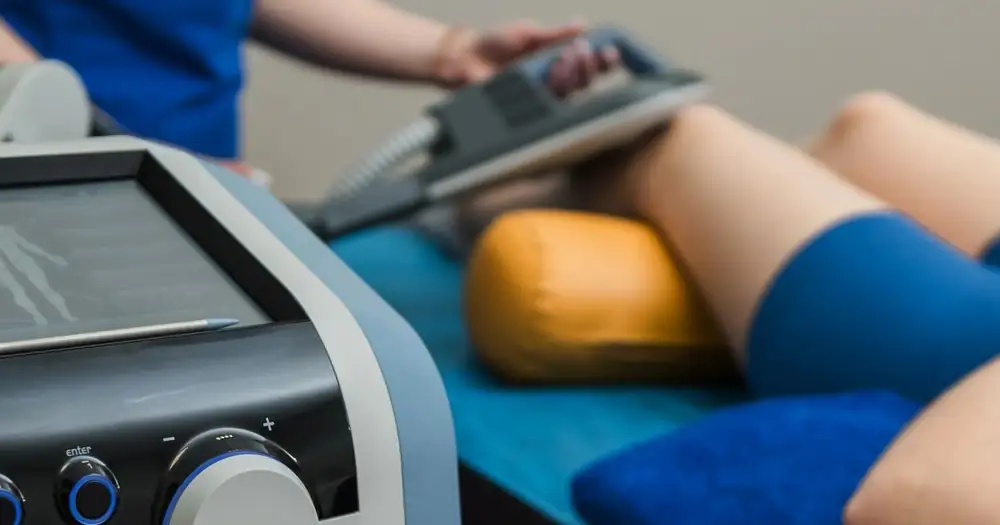
Whole body vibration therapy, delivered through platforms like the Power Plate Pro 7, activates muscle fibers through a different mechanism — the body's reflexive response to rapid, multi-directional vibration.
Research shows that Power Plate training:
- Activates up to 138% more muscle fibers than conventional exercise
- Increases bone mineral density — critical for preventing osteoporosis
- Improves balance and reduces fall risk
- Supports muscle preservation in older adults who may not tolerate high-impact exercise
For patients who struggle with traditional exercise due to joint pain, post-surgical recovery, or limited mobility, whole body vibration offers a gentler but highly effective path to the same goal: keeping muscle alive and functional.
Regenerative Therapies
At Cellular Wellness Clinics, we take this further. For patients dealing with significant muscle loss, joint degeneration, or the downstream effects of years of inactivity, we combine physical therapies with regenerative treatments — including stem cell therapy and PEMF — to address the cellular environment that makes muscle recovery possible.
Stem cell therapy introduces regenerative signaling molecules that support tissue repair. PEMF (Pulsed Electromagnetic Field therapy) works at the mitochondrial level to restore cellular energy production — the engine that powers muscle function.
The Conversation We Need to Have About Aging
The MRI images of those two 74-year-olds are not meant to shame anyone. They're meant to reframe the conversation.
Aging is not simply a matter of time passing. It is a matter of what you do with that time — and increasingly, what interventions are available to help you do more.
The body is remarkably adaptable at any age. The research is clear that it is never too late to begin. Adults who start resistance training in their 60s, 70s, and even 80s show measurable improvements in muscle mass, strength, metabolic health, and quality of life.
The question is not whether you can improve. The question is whether you have the right support to do it.
What We See at Cellular Wellness Clinics
Every week, we work with patients in Greenville, SC who come to us after years of watching their strength, energy, and independence slowly erode. Many of them have been told that what they're experiencing is just "normal aging."
It isn't. Or at least, it doesn't have to be.
We build personalized wellness plans that address the root causes of age-related decline — not just the symptoms. That means combining the right physical therapies (Power Plate, PEMF, red light therapy) with regenerative treatments and, where appropriate, hormone optimization to restore the internal environment that makes recovery possible.
The goal isn't just to feel better. It's to look like that active 74-year-old on the inside — regardless of what the calendar says.
Ready to take the first step? Call us at (864) 438-4651 or schedule a consultation with Dr. Bennett to discuss a personalized plan for your health and longevity goals.